
Is it possible to regrow hair on a receding hairline? It is one of the most frequently asked questions, because many men and women are suffering from it. This post will show you everything you need to know.
When it comes to hair loss, one of the first signs you see is probably a receding hairline. Actually, most men will notice their hairline moving back at some point in their lives.
In fact, 50% of men suffer from male pattern baldness by age 50. It’s not just a male issue. There are many different causes of hair loss. Receding hairlines and thinning are more common in women than most people realize.
If you’ve started to suspect that your hairline is moving back, your first question is probably: Can it grow back? To answer that, we need to look at what’s causing the change, how to recognize a true receding hairline, when it might be temporary, and what your options are if the hair doesn’t grow back naturally.
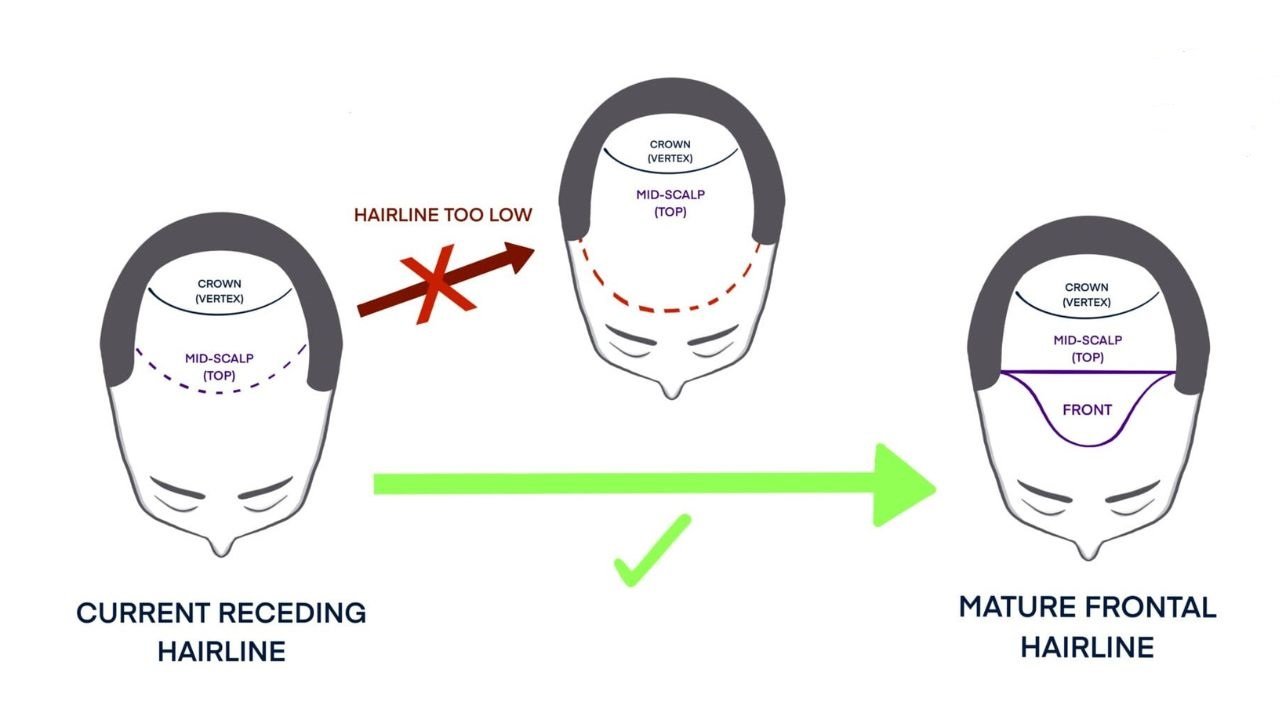
What Causes a Receding Hairline?
Hair loss can start in many ways, but the hairline and temples are very common starting points. Some of the main causes include:
Ageing – many men begin to notice their hairline receding in their late 30s and beyond.
Hereditary hair loss – such as male pattern baldness (androgenic alopecia), which is strongly linked to genetics.
Constant pulling – tight hairstyles like braids, ponytails, extensions, or man buns can cause traction alopecia.
Regular chemical use – frequent bleaching, peroxide, or harsh dyes can weaken hair and irritate the scalp.
Unhealthy diet – poor nutrition can reduce the quality and strength of new hair growth.
Smoking can affect blood circulation and overall scalp and hair health.
Under normal conditions, healthy hair follows a cycle: it grows, rests, sheds, and is replaced by new hair from the same follicle. This happens every day, but is usually so gradual we hardly notice it.
When hair follicles become damaged, or their growth cycle is disrupted by hormones such as DHT, physical tension, chemicals, or medical conditions, the cycle can slow down or stop. Hairs grow back thinner and shorter, or they may stop growing entirely. That’s when you start to see visible thinning and a receding hairline.
How to Check if You Have a Receding Hairline
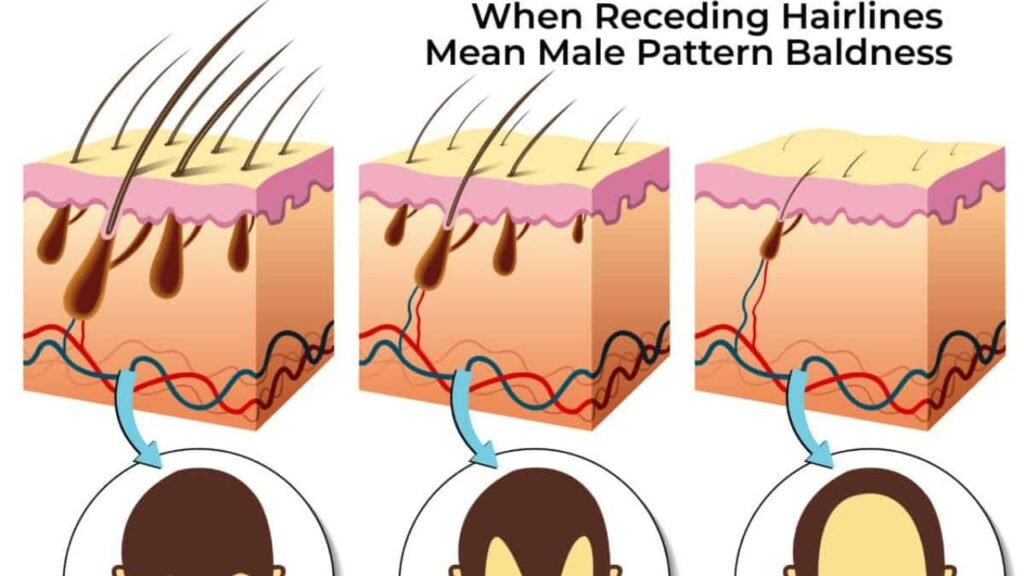
A receding hairline is typically defined as hair loss or thinning that begins around the temples and front of the scalp. This exposes more forehead or scalp, so your hairline appears to start further back than it used to.
If you’re unsure whether this is happening to you, look out for these signs:
You notice more hair shedding than usual (on your pillow, brushes, or in the shower).
Your hairline clearly sits further back compared with older photographs.
Your hair around the front or temples looks thinner, or styles don’t sit the way they used to.
The hair at the front feels finer, softer, or “fluffier” than before.
The hairline looks patchy or uneven rather than dense and solid.
Because many types of hair loss start at the hairline, receding and general thinning often go hand in hand. The exact pattern will vary from person to person, but if you notice any thinning around the hairline, you’ve likely identified the early signs of a receding hairline.
If you’re worried, a hair loss clinic or specialist can assess your scalp and give tailored advice based on your situation.
Can a Receding Hairline Be Temporary?
This is a key concern for most people: Does a receding hairline automatically mean you’ll go completely bald? Will it keep getting worse, or can the process be slowed or even reversed?
In some cases, a receding hairline can be temporary.
Situations that may cause short-term hairline changes include:
Certain medical treatments or medications
Major illness or a very stressful life event
Traction alopecia from tight hairstyles
Damage from strong chemicals or heat styling
If these triggers are addressed early – for example, by changing your hairstyle, reducing chemical use, treating underlying health issues, or managing stress – further damage may be prevented, and some regrowth is possible.
However, if your hairline is receding due to male pattern baldness, age, or genetic conditions, the hair usually will not regrow fully on its own. In those cases, you’ll need medical, surgical, or cosmetic solutions to restore the look of your hairline.
Is It Possible to Regrow Hair on a Receding Hairline with Hairline Restoration Treatments?
When the cause is male pattern baldness, ageing, or other genetic factors, the follicles at the hairline have often become miniaturized or inactive. That means simply waiting for them to “wake up” is unlikely to work. The good news is that several treatment paths can help you slow the process, support regrowth where possible, and restore the appearance of a fuller hairline.
Broadly, your options fall into three groups:
Non-surgical medical treatments – aimed at slowing loss and stimulating remaining follicles.
Surgical treatments – especially hair transplantation, to rebuild the hairline.
Non-surgical cosmetic solutions – such as hair systems and hair toppers, which instantly restore coverage and shape.
A hair loss specialist can help you work out which combination suits your needs, your level of hair loss, and your lifestyle.
Non-Surgical Medical Treatments
Some medications and non-surgical therapies can stimulate hair growth, help existing hair grow thicker, and slow further hairline recession.
Finasteride
Finasteride (brands include Propecia, Proscar) is an oral medication used mainly for male pattern hair loss.
It works by reducing levels of DHT, a hormone that can shrink hair follicles.
By lowering DHT, finasteride can slow or stop further hair loss, especially at the hairline and crown.
It does not instantly rebuild a hairline, but it can help preserve what you have and, in some cases, encourage some regrowth. It is prescription-only and not suitable for everyone, so medical advice is essential.
Minoxidil
Minoxidil (often known as Rogaine) is a topical treatment applied directly to the scalp.
It helps stimulate hair growth and keep more hair in the active growth phase.
It can improve density in thinning areas, including around the hairline, while you continue to use it.
Minoxidil does not “cure” a receding hairline, but it can make it look fuller and support other treatments.
PRP (Platelet-Rich Plasma)
PRP therapy uses the platelets in your own blood to encourage hair growth.
A small amount of blood is taken and processed to concentrate the platelets.
This platelet-rich plasma is injected into areas of thinning, including the hairline.
The growth factors in the platelets can help stimulate dormant follicles.
PRP is often used alongside finasteride or minoxidil to boost results. It can be relatively quick and straightforward, though multiple sessions are usually required.
Hair Transplants
For both men and women, hair transplants can be very effective in restoring a receding hairline.
In this surgical procedure:
Healthy hair follicles are taken from areas of strong growth (usually the back or sides of the head).
These follicles are transplanted into thinning or bald areas at the hairline.
Once healed, the transplanted follicles continue to grow hair in their new location.
The result can be a more natural, permanent-looking hairline. However:
Not everyone is a candidate (you need enough strong donor hair).
It is a surgical procedure with cost, healing time, and some risks.
You may still need medical treatments to protect the hair around the transplanted area.
For suitable candidates, hair transplantation can play a major role in rebuilding the hairline, especially when combined with other therapies.